
Between the 16th and 19th centuries, the North African Barbary regencies—Algeria, Tunsia, Morroco and Libya—alongside the wider Ottoman Empire, sustained complex, interconnected systems of slavery that encompassed both Sub-Saharan Africans and European Christians. These systems were not peripheral; they were institutionally embedded in the economic, political, and military structures of the region.
Centered in key port cities, Barbary slavery functioned through coastal raids, corsair activity, and trans-Saharan trade routes. European captives were typically seized in maritime attacks or abducted from coastal settlements as far afield as Italy, Spain, and even the British Isles. Many were held for ransom, while others were sold in slave markets, forced into state labor, or assigned to elite households and naval galleys. Concurrently, African captives—drawn from the Sahel, Central Africa, and the Horn—were transported northward across the desert and integrated into domestic, agricultural, and administrative labor, as well as elite military units such as the Janissaries and Mamluks.
Slavery in the Barbary and Ottoman worlds was shaped by religion, empire, and legal status rather than racial ideology. Enslaved individuals could be owned privately or by the state, with state-owned slaves often deployed in public works, fortification projects, and administrative service. In some cases, religious conversion or the possession of valuable skills offered captives a pathway to manumission or integration—though such outcomes remained rare. Despite differences from the racialized plantation systems of the Atlantic world, this system was no less coercive or enduring.
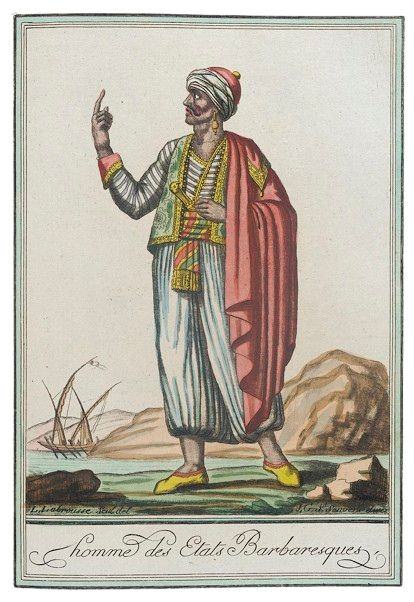
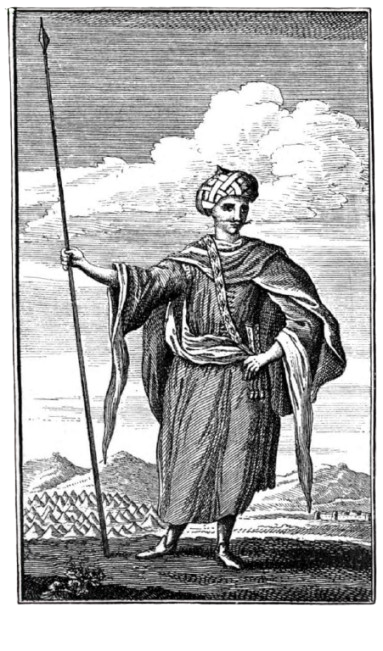
The Barbary Archive is committed to the documentation, analysis, and public presentation of the North African and Ottoman slave trades, with a focus on the enslavement of both European Christians and Sub-Saharan Africans between the 16th and 19th centuries.
Drawing on primary sources, captivity narratives, legal records, and scholarly research, the Archive seeks to illuminate a historically significant but often understudied system of slavery. This institution, though differing in structure from the Atlantic slave trade, was no less integral to the political economies of the Barbary regencies and the Ottoman world.
Our work aims to contribute to a broader understanding of global slavery by examining its regional variations, ideological frameworks, and long-term consequences. The goal is not to draw equivalences between distinct systems, but to restore complexity to the historical record and to explore slavery as a multifaceted global phenomenon.
By presenting this material clearly and critically, the Barbary Archive offers resources for scholars, students, and the public interested in the histories of captivity, empire, and human movement across the early modern Mediterranean and beyond.
We welcome scholarly dialogue and constructive feedback. If you have questions, comments, or concerns regarding the content, or functionality of this archive, please reach out to us at contact@thebarbaryarchieve.org. Your insights help us improve both the accuracy and accessibility of this resource.
Stay informed with our annual newsletter; an overview of key developments within The Barbary Archive’s research project. Featuring analytical essays, newly accessible materials, and scholarly commentary. You can sign-up by completing the form below.
Fields with an asterisk (*) are mandatory and must be filled out.